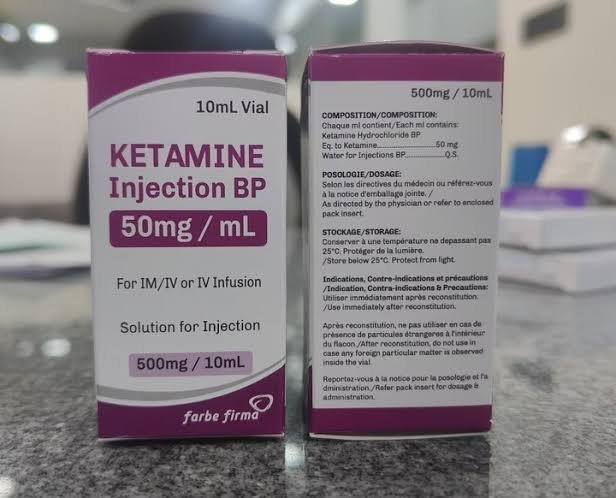

When people search for S-ketamine vs R-ketamine effects, they are often looking for one key answer: how can two versions of the same molecule produce different effects? Ketamine exists as two mirror-image molecules, known as enantiomers: S-ketamine and R-ketamine. S-ketamine is also called esketamine, while R-ketamine is known as arketamine. Together, these two forms make up racemic ketamine.
Research into ketamine enantiomers has attracted significant attention because the two forms appear to differ in their receptor activity, anesthetic potency, antidepressant effects and side-effect profiles. However, an important distinction is that much of the evidence for R-ketamine’s potential advantages comes from laboratory and preclinical studies, while S-ketamine has established clinical use for specific depressive disorders.
What Is S-Ketamine?
S-ketamine, or esketamine, is the S-enantiomer of ketamine. It has a substantially higher affinity for the N-methyl-D-aspartate (NMDA) receptor than R-ketamine. Reviews report approximately three- to four-fold greater NMDA receptor affinity, which helps explain its greater anesthetic potency.
S-ketamine has also become particularly important in psychiatry. Intranasal esketamine has been approved in the United States and Europe for certain patients with treatment-resistant depression, making it the ketamine enantiomer with established regulatory approval for this purpose.
Its stronger NMDA receptor activity can also be associated with dissociation, sedation and psychotomimetic effects, meaning treatment requires appropriate medical supervision.
What Is R-Ketamine?
R-ketamine, or arketamine, is the other mirror-image form of ketamine. Interestingly, although R-ketamine has lower NMDA receptor affinity than S-ketamine, preclinical research has repeatedly suggested potentially strong and longer-lasting antidepressant-like effects. Some animal studies have also found fewer psychotomimetic or motor effects compared with S-ketamine.
This apparent difference is one of the most fascinating areas of current ketamine research. Scientists are investigating whether R-ketamine may produce antidepressant effects through mechanisms involving neuroplasticity, AMPA receptors, BDNF and intracellular signaling pathways, rather than simply through stronger NMDA receptor blockade.
S-Ketamine vs R-Ketamine: Effects Compared
At a high level, the key differences look like this:
| Feature | S-Ketamine | R-Ketamine |
|---|---|---|
| Also known as | Esketamine | Arketamine |
| NMDA receptor affinity | Higher | Lower |
| Anesthetic potency | Higher | Lower |
| Antidepressant research | Established clinical use | Primarily investigational |
| Dissociative effects | Can be significant | Generally milder in available studies |
| Evidence base | Stronger clinical evidence | Promising but still developing |
It is important not to interpret this table as meaning that R-ketamine is automatically “better.” Clinical research has produced mixed results, and some randomized controlled trials have not demonstrated significant antidepressant efficacy for R-ketamine compared with placebo.
Which Has Fewer Side Effects?
One of the major reasons researchers are interested in R-ketamine is its potentially milder side-effect profile. Preclinical research generally suggests that S-ketamine produces stronger psychotomimetic effects, while R-ketamine may produce fewer of these effects.
However, clinical evidence remains limited. It would therefore be misleading to claim that R-ketamine is definitively safer for everyone. More large-scale human studies are needed to establish its long-term safety, effectiveness and potential for misuse.
Which Has Stronger Antidepressant Effects?
This is where the research becomes especially interesting. Animal studies have frequently found R-ketamine to produce more potent or longer-lasting antidepressant-like effects than S-ketamine.
Human evidence is much less conclusive. Reviews emphasize that clinical trials of R-ketamine remain limited, and some controlled studies have failed to demonstrate a statistically significant antidepressant benefit over placebo.
By contrast, S-ketamine has a considerably more established clinical evidence base and regulatory history.
The Bottom Line
The S-ketamine vs R-ketamine effects debate is more complicated than simply deciding which enantiomer is stronger. S-ketamine has greater NMDA receptor affinity and established clinical applications, while R-ketamine has generated considerable interest because of promising preclinical evidence suggesting potentially durable antidepressant effects with fewer dissociative effects.
The most important takeaway is that preclinical promise does not automatically translate into proven clinical effectiveness. Anyone considering ketamine or esketamine treatment should discuss the options, risks, contraindications and expected benefits with a qualified healthcare professional rather than attempting to self-administer ketamine or its enantiomers.